"Order my book on the Roussillon direct saving £4/€4 (UK & EU only) or download the Kindle eBook on Amazon UK . Buy it in the USA ...

Domaine Bila-Haut (Chapoutier)
Chapoutier made a move on the Roussillon more than 20 years ago establishing a vineyard and winery base in Latour de France in the north (first vintage 2001). Further projects and wines followed from nearby Lesquerde to Collioure and Banyuls-sur-Mer on the Côte Vermeille coast, some from owned vineyards and some in partnership with other growers.
Now run by Clémence Fabre and husband Louis-Jacques, this centuries-old wine family owns five vineyards in the Minervois and Corbières in the Languedoc. Recent departures from traditional winegrowing include estate-grown barley and hops, which are supplied to a Béziers brewery; and Clémence's brother André set up a cidery producing 'real' ciders two years ago. Hence, the quirky 'Pet Nat' (pétillant naturel) Vranja reviewed in this post, a "natural sparkling wine made from quince, apple and pear..."
Domaine Sol Payré
Didier and Tatiana Rodriguez farm 56 hectares of organic vineyards, which mostly lie between Elne and Ortaffa south of Perpignan heading towards the magnificently moody Albères hills on the Spanish border, as well as a few blocks in the Maury area in the north.
David Loiret, La Part des Anges (see below).
Château Planères
This fourth-generation estate winery is owned and run by the Jaubert family and is found in the pretty countryside of Les Aspres zone in the central-southern Roussillon, just outside the blink-and-miss-it village of Saint-Jean Lasseille. Some of these wines are new labels.
The
Roussillon wine people in Perpignan (green link goes to the local wine industry website, known as the CIVR for short) held a suitably tasty trade event in Edinburgh a few weeks ago, which showcased a dozen estate wineries and co-op cellars. The last articles I posted about the Roussillon were grouped by geographical area and wine style...
This line-up of ten Coup de Coeur (meaning personal favourite, top pick or 'wine of the moment' to coin my usual jargon) Roussillon champions were chosen by a London-based panel of wine media and educators from an extensive tasting organised by the Roussillon wine association in Perpignan.
The Wine Society is the world's oldest cooperative wine merchant, or 'member-owned community of wine lovers' to use their own words, based in Hertfordshire UK. Here are my dozen top picks from their recent Belfast tasting in tantalisingly random order.
Following my post on
Cabernets from Argentina, this second instalment of a short duet about Argentinian reds moves on to Malbec, Syrah and Pinot Noir. Malbec is a familiar proposition nowadays: the variety came from southwest France to Argentina in the 1850s and now represents 40% of red grapes (
winesofargentina). Syrah has a shorter history but has gained ground over the last decade, producing sometimes superb varietals and as a component of full spicy red blends.
The first of two features on red wines from Argentina centres on Cabernet Sauvignon and/or Cabernet Franc and combinations with other grapes. Some of these include the nation's darling variety Malbec as a lesser percentage of the blend; the next post will cover wines made from all or mostly Malbec and/or Syrah, where Malbec or Syrah take the lead role (with other grapes). So, if you're still with me, here are 10 sexy Argentinean Cabs worth lifting.
The casse-croûte of the cassoulet in Malepère.
Located to the northwest of
Limoux and southwest of Carcassonne, Malepère is the most westerly of the Languedoc's appellations and probably one of the least known wine areas in the whole region. There's an eclectic mix of Mediterranean and Atlantic vine types, and the local wine people have cooked up an interesting story around how climatic influences from both 'sides' suit these nevertheless dissimilar grape varieties (seven authorised).
Château de Flandry, Limoux.
Perhaps not that famous outside of France (although many of the wines recommended here are well distributed in Europe and North America), the Limoux region stretches mostly to the south, west and north of the visit-worthy town of Limoux in southwestern Languedoc, about half an hour south of Carcassonne. The vineyards are often planted on hillsides enhancing the slightly cooler climate this area enjoys, which is home to some classy sparkling wines, Chardonnay, Chenin Blanc and Pinot Noir among others.

The final rant of 2023 about the Roussillon covers my favourites encountered earlier this year from the Côte Vermeille: mainly Collioure white wines (
rosé is here), Banyuls Vin Doux Naturel (VDN) sweet fortified wines (including some old vintages), and neighbouring Côtes du Roussillon (white and red) that miss the Collioure appellation (of little importance apart from the price they can charge!).
Overlooking a vineyard, Cases-de-Pène Agly Valley.
Continuing this year's series of tasting and touring articles on the Roussillon, this time we're heading back north to the Agly Valley to supplement a previous piece on the
Maury area, as well as one focused on winemakers in
central Roussillon (Les Aspres and either side) and one celebrating the region's
rosé wines (compared to Languedoc). Meaning there's one more report picking favourites from
the south (Collioure, Banyuls and neighbouring Côtes du Roussillon and Côtes Catalanes wines).
Vineyard near Terrats in Les Aspres, central Roussillon.
Côtes du Roussillon Villages and Les Aspres, Côtes du Roussillon, Côtes Catalanes and Rivesaltes VDNs.
Talking of the Aspres and neighbouring areas in central and eastern Roussillon, barrels full of heartfelt empathy go out to those winegrowers who had the very bad luck of being hit by a freak storm just before some remaining black grapes were due to be picked this vintage. One night of terrible wind and rain after months of drought with virtually no rainfall, which had already made things difficult and reduced the crop.
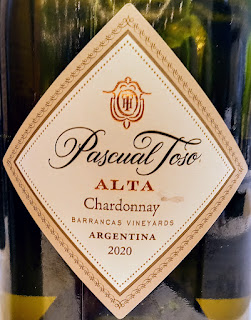
Chardonnay is grown in many of Argentina's wine regions north to south although most of it by far in the province of Mendoza. It's officially the number two white grape (after Torrontés), which isn't saying much: Argentina remains serious red wine country. Making a perhaps more familiar European comparison though, there's about the same amount of Chardonnay as in Chablis, but planted much higher up.
Background: Château de Flandry, Limoux, Languedoc by RMJ. Header: Lavail Vigne, Roussillon © CIVR.