Roussillon 'French Catalonia' wine book

"Order my book on the Roussillon direct saving £4/€4 (UK & EU only) or download the Kindle eBook on Amazon UK . Buy it in the USA ...

Search WineWriting.com:

19 May 2014

Bordeaux: 2010

There's been more than enough verbal and written hot air generated about how great a vintage 2010 was/is in Bordeaux and how the top wines were blatantly priced for millionaire investors only. So I'm not going to add a single word more on the subject... Except to say here's a resurrected mini-retrospective of two dozen very tasty 2010 Grands Crus reds sampled in London last year, rather at random across a few well- and not-so-well-known appellations and properties.
Updated 28 May - new wine added at end.

From www.facebook.com/Chateau-de-France-Pessac-Leognan
Pessac-Léognan

Domaine de Chevalier – cedar, red pepper and 'inky' notes vs vibrant plum, cassis and cherry; quite soft tannins on a warming palate (13.5% abv), tasty now actually with nice fruit and light bitter twist on the finish.
Château de Fieuzal – richer and smokier with more coconut/cedar oak, quite concentrated and firm yet rounded too, nice sweet cassis vs light oak texture, a bit of weight too with good balance and style.
Château de France – quite opulent plummy and black cherry fruit vs cedar/coco edges, more extracted and firmer vs that vibrant fruit, structured vs rounded finish; quite seductive.
Château Malartic-Lagravière – smoky dark fruit with cassis and cherry and a vanilla coating, dry bitter chocolate bite but it's quite elegant and balanced with subtle concentration.

Saint-Émilion

Château Beau-Séjour Bécot – quite oaky vs attractive lively damson fruit, dry yet silky tannins, nice underlying depth and elegance although again a touch chocolatey at first.
Château Figeac – herby plummy cassis notes, light bitter twist of dry tannin vs again attractive sweeter berry fruit underneath.
Château Franc Mayne – cedary coconut tones vs fairly lush black cherry and plum, nicer tannins with dry vs silky texture, good depth of fruit vs chocolatey finish with bite.
Château La Couspaude – quite smoky and ripe, fairly concentrated and chunky, firm vs sweet oak and fruit; nice style, should blossom.
Château La Tour Figeac – quite complex, ripe berry with herby edges; fairly lush and silky vs dry grip, nice texture with chocolatey touches vs lovely fruit. Yum.

Listrac-Médoc

Château Clarke – leafy berry touches, more 'claret' like, subtle depth of berry and cassis fruit, firm yet attractive tannins; not so in-your-face, elegant Médoc style.
Château Fourcas Hosten – plummier and richer, more chocolate/coconut too but has tasty ripe dark fruit with cedary undertones, firm and structured vs rounded tannins; quite concentrated, balanced in the end, good wine.

Margaux

Château Angludet – rich cassis and black cherry, quite concentrated and firm vs an elegant touch, sweet fruit vs subtle oak texture. Good stuff.
Château Cantenac Brown – perfumed with cedar/vanilla notes and berry fruits, firm palate in a leaner style, quite good in that way.
Château Labégorce – nice dry vs ripe texture, structured vs sweet berry with tight long finish, bitter twist vs rounded; closes up, should be good.
Château Lascombes – chocolate and coconut oak vs fairly lush fruit, extracted and concentrated vs ripe berry and cassis, pretty solid mouth-feel with herby/cedary tones vs lovely fruit, quite big too yet well-balanced; very nice wine.
Château Marquis de Terme – enticing sweet berry, cassis and cherry vs cedary edges; soft tannins and quite elegant vs nice intense berry fruit and dusting of cedary oak; good.

Saint-Julien

Château Léoville Barton – leafy cedary tones vs coconut/vanilla vs quite rich cherry and cassis, dry vs sweet texture, freshness vs power, very nice balance and style. Yum.
Château Léoville Poyferré – 'inkier' and smokier vs attractive sweet cherry and blackcurrant, firm vs silky texture; again stylish and balanced, very nice wine.

Pauillac

Château Grand-Puy Ducasse – leafy cedary tones vs cherry and berry, structured in a leaner firmer style, freshness vs power; perhaps not as 'generous' as some of the others.
Château Pichon-Longueville – quite tight and firm vs ripe almost dried cassis, structured and powerful with tight cedary grain, nice fruit vs grip vs weight too.
Château Pichon Longueville Comtesse de Lalande – ripe cherry fruit with floral and cedar/coco notes, grippy tight mouth-feel vs nice sweet cassis fruit and fine dry tannins. Yum.

Pomerol

Château Petit-Village – quite lush and seductive vs firm and cedary, nice texture with grip and oomph; fairly big style yet still tight and structured.

Saint-Estèphe

Château de Pez – fair amount of chocolate oak, rich extracted and firm but it works, attractive tannins in the end, powerful but balanced with nice depth of ripe fruit.
Château Lafon-Rochet – again quite a bit of oak vs lush and extracted, ripe almost dark fruit vs cedary texture, grip and punch vs concentrated and ripe. Chunky and tasty, like the yellow wedding cake chateau...

Lots more Bordeaux stuff HERE.

UPDATED 28 May. Not a 'Grand Cru' Bordeaux but an equally good 2010 and considerably more affordable too:
Chateau Le Bonnat Jeansotte Graves (Merlot, Cabernet Sauvignon, 13.5% abv) - a new one I think from Marks & Spencer at £12.99: pretty "classic" Merlot dominated style although riper and fleshier vs quite firm / structured still with underlying cedar oak hints, fairly concentrated and classy for the price (still not exactly inexpensive though for sure).

Bordeaux: 2010

This post has been moved here for 'technical reasons' (apologies for sending you around in circles)...

From www.facebook.com/Chateau-de-France-Pessac-Leognan


15 May 2014

Croatia

New feature on wines from Croatia including these dozen wineries: Roxanich, Geržinić, Laguna, Matošević, Belje, Iločki, Krauthaker, Daruvar, Bodren, Stina, Zlatan, Svirče; and the local varieties Teran, Malvazija, Graševina, Zelenac, Traminac, Plavac Mali, Pošip among others... Plus a few travel tips thrown in too...
"As for the main wine producing regions touched on and tasted here, Istria is that huge peninsular forming the northwestern chunk of Croatia lying to the south of Trieste and the Slovenian border and, at a dreamy distance, facing Venice across the Adriatic to the west and the first of Croatia's many beautiful coastal islands to the east. The Istrian red variety Teran, or Terrano, is actually related to Refosco and is found in Croatia, Italy and Slovenia. One of the principal white grapes grown in this area is Malvazija or 'Istrian' Malvasia, which can be transformed into some pretty good and varied-style white wines..."
READ ON... (goes to "Croatia page".)

Pic. = RMJ in Split old town.

08 May 2014

Roussillon: Mas Amiel update

There are already several words about Mas Amiel on this blog (searches for everything) and their wide range of wines, so I won't add too many more... But MA has launched a series of single block reds called 'Terres Rares' including 'Towards the North' tasting-noted below, which, apart from this vineyard's "does what it says on the label" exposure, comes from a two-hectare parcel called La Devèze.

07 May 2014

Rhone: Rasteau and Loire: Quarts de Chaume

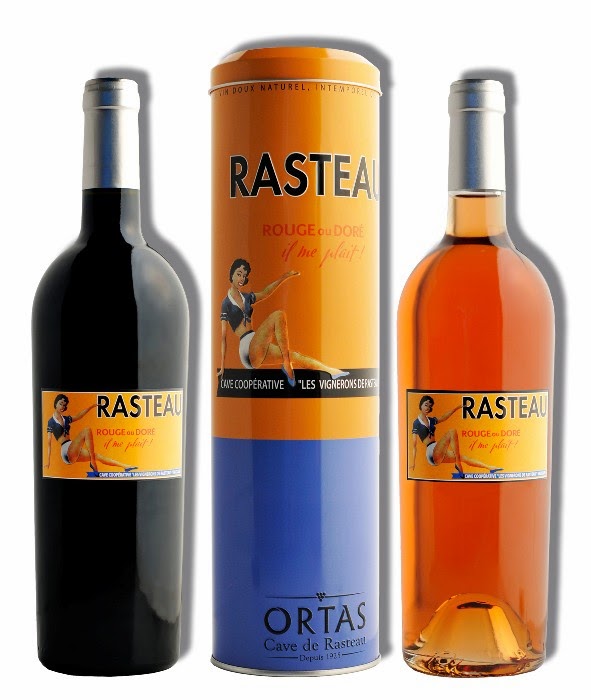
Or a couple of gratuitous red versus white "sweeties of the moment," which have nothing in common whatsoever but are both worth sipping and talking about. Let's start in the southern Rhone Valley with a 'port-style' speciality made by the co-op winery Cave de Rasteau, who are celebrating 70 years of the Rasteau Vin Doux Naturel (VDN, fortified sweet wine) appellation.

29 April 2014

Chile: Cabernet Sauvignon

In a similar vein to my piece on Cabernet from Argentina (goes there) posted at the end of last year, Merlot, Carmenere and now Syrah and Pinot have perhaps become Chile's most fashionable varietal darlings. But there's still a lot of vinous enjoyment to be had from wines made solely or mostly from Cabernet Sauvignon; and occasionally more than mere enjoyment, as in fact some of Chile's best reds are crafted from Cab or Cab blends. Here's a gratuitous 'top ten' then (actually, "this one goes to 11...") that have come my wine-way in recent-ish times.

01 April 2014

Roussillon: Le Soula, Fenouillèdes

Le Soula has featured here before – see HERE ('Roussillon: three whites' from 2011 featuring their 2006 vintage) and HERE (notes and blurb spanning the period 2006 to 2010 on Domaine Gauby, who sought out, set up and part-owns Le Soula) - so it seemed like a good idea to add a few background words complementing my comments on recent vintage releases of some of their reds and whites.

31 March 2014

Roussillon: Domaine Jolly Ferriol, Espira de l'Agly

Isabelle Jolly and Jean-Luc Chossart took over this three-and-a-half-century old property, in that cute old Catalan farmhouse style, in 2005, which is found off the meandering main road between Espira and Cases de Pène, a few kilometres west of Rivesaltes. They've been farming organically from the start (they're now 'certified' anyway) using indigenous yeasts for 'spontaneous' fermentation, and most of their wines have no added sulphites (except the Muscat de Rivesaltes as stated below for instance) and don't get fined or filtered they claim. This riskier 'natural' approach can sometimes lead to mixed results, although it's mostly successful with the wines I tasted here, especially their "blah blah" white based on Grenache gris, varietal Syrah and a couple of very different Muscats. More about Isabelle and Jean-Luc, their way of life, details on the wines etc. on www.jollyferriol.fr where I pinched this photo from.


2012 Blablablanc (mostly Grenache gris with Macabeu) – floral peach blossom vs yeast lees and nutty characters, intense and tasty palate with long finish; very nice white.
2012 Pet'Nat ("naturally sparkling" Muscat from second fermentation in bottle, 12% abv) – attractive and unusual style with biscuity notes vs grapey flavours; fairly light and easy.
2010 Fait d'Hiver (Syrah, Grenache, Carignan) – funky 'volatile' nose vs pure ripe dark fruit cocktail, dried and earthy with chunky vs soft mouth-feel; quite intense, a little on the wild side though.
2009 Syrah – perfumed violet and black cherry, turning more liquorice-y and peppery on the palate, rich fruit and tannins but rounded and quite fine for 'hot dry year' 2009.
2006 Muscat de Rivesaltes (total sulphites 28 mg/l) – “very low yields and much less alcohol added than usual,” I was told. Complex marmalade and quince notes with orange peel zest, nutty and toasty too on the palate. Lovely style.
Passe-temps Rivesaltes ambré (70% Macabeu, 30% Grenache gris; 3 years cask ageing, 16% abv) – nutty and dried fruits, oxidizing 'Madeira' profile although fruitier, intense bitter vs sweet mouth-feel with tasty ageing savoury flavours.

25 March 2014

Languedoc: La Réserve d'O, Terrasses du Larzac

Marie and Frédéric Chauffray bought a few plots lying at 400 metres above sea level in the wild and airy Terrasses du Larzac appellation in 2005 - you can read my note on their first vintage red from that full-bodied year HERE (links to 'Top Languedoc & Roussillon reds over €10' tasting feature) - when they created La Réserve d'O, using a bit of word play, presumably, for that catchy name. They also starred in 'Les Terroiristes du Languedoc' documentary film (links to post about this) made by American wine-cineaste Ken Payton.
The couple also has vines in the Saint-Saturnin area, which is a sort-of subzone of the wider Terrasses du Larzac so-called cru appellation ("Confused? You will be..."), all farmed under the influence of biodynamics from the very beginning, so the story goes; and had a new cellar built in the village of Arboras the following year... LRO is a name I've bumped into before, as I said, and I'm glad I (re)discovered them a few months ago, as their wines are tasty, full of sunshine and have nice depth of character too.
Some of them are available in the UK from Cambridge Wine Merchants, Drop Wines, the Humble Grape, the Wine Society and others; and in the US: Johns Island Imports, IL and Astor Wines, NY. More @ lareservedo.fr.

2012 Sanssoo St-Saturnin (Syrah, Cinsault; no added sulphites, filtered) – lovely cherry and berry fruit, peppery with liquorice too; tasty juicy palate, quite concentrated and rich though with a certain freshness on the finish too. Lovely. £14
2010 La Réserve d'O Terrasses du Larzac (Syrah, Grenache, Cinsault; total sulphites 45 mg/l, filtered) – enticing spicy floral nose with darker blackberry side, lush and ripe with nice tannins and mouth weight, fruity vs earthy finish. Yum. £11.99 - £13.99, $19.96
2009 Hissez O Terrasses du Larzac (similar blend but with more Syrah and some barrel ageing; total sulphites 40 mg/l, filtered) – again has delicious dark vs herby spicy Syrah styling, rich and full-on vs nice grip/bite, earthy vs dried fruit flavours, powerful yet concentrated finish. Wow.
2011 Bilbo St-Saturnin (mostly Grenache; total sulphites 37 mg/l, filtered) – ripe and juicy with liquorice vs crunchier berry fruit, weighty with a light bitter twist, also concentrated and long; nice Grenache style. £10.95 - £12.99

RED

'Red is for wine, blood, revolution, colour... Time-warped slices of mystery, history, fantasy, crime, art, cinema and love...' Buy the e-book or paperback novel on Amazon.co.uk or Amazon.com. Click here to view the RED blog!